

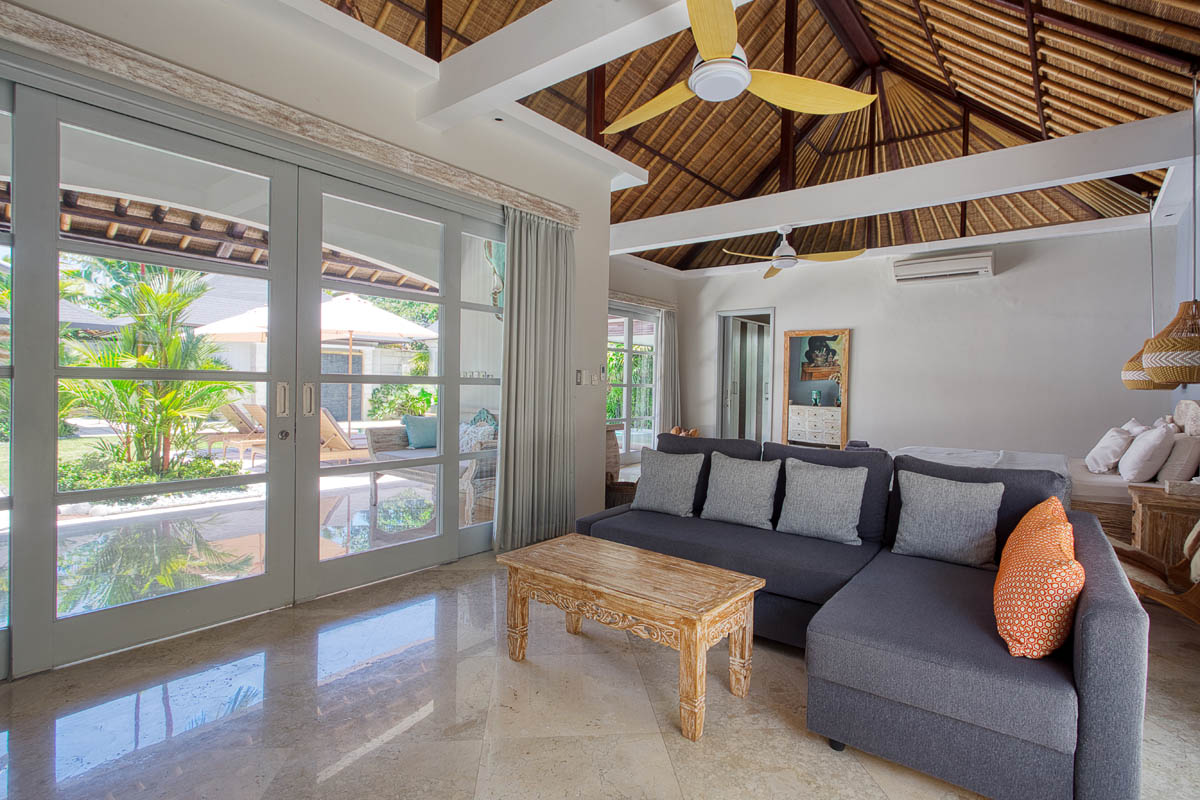

Bali sells a dream: private pools, open-air living, tropical calm.
Reality? It can be an incredible lifestyle—or a logistical headache—depending on how well you understand the system.
This guide breaks down what actually matters before you buy or rent a villa in Bali.
1. Villa Living Isn’t “Plug and Play”
If you’re expecting condo-level convenience, adjust your expectations.
Most villas in Bali are:
- Semi-outdoor (humidity, insects, weather exposure)
- Maintenance-heavy (pools, gardens, roofs)
- Staff-dependent (cleaning, security, repairs)
Translation: villas require ongoing management.
What this means in practice:
- Pool cleaning: 2–3x per week
- Garden maintenance: weekly
- Repairs: frequent (tropical climate is brutal on materials)
- Staff coordination: ongoing
If you’re renting short-term, this is handled for you.
If you’re renting long-term or buying—you’re now running a small operation.
2. Property Management: The Hidden Make-or-Break Factor
Bad management kills ROI. Period.
If you’re buying as an investment, you need:
- Guest handling (check-in, communication)
- Cleaning & maintenance teams
- Booking platform optimization (Airbnb, direct bookings)
- Pricing strategy (seasonality matters heavily)
Typical management structures:
- Full-service management (20–30% fee): hands-off, lower margin
- Hybrid/self-managed: higher profit, more involvement
- In-house staff: best control, highest complexity
Most first-time investors underestimate this.
A beautiful villa with bad management will underperform a decent villa with strong operations.
3. Legal Reality (Don’t Skip This)
This is where people get burned.
Foreigners cannot directly own freehold land in Indonesia. The common structures:
Ownership options:
- Leasehold (Hak Sewa): most common, fixed-term (e.g., 25–30 years)
- Right to Use (Hak Pakai): limited ownership rights
- PT PMA (foreign-owned company): for larger, compliant investments
Critical risks:
- Wrong zoning (can’t legally rent it out)
- Invalid permits (IMB / PBG)
- Nominee structures (high risk if not structured properly)
If the villa isn’t legally allowed to operate as a rental, your ROI projections are fantasy.
Always verify:
- Zoning = tourism (pariwisata)
- Building permit (PBG)
- Rental license compliance
No exceptions.
4. Lifestyle Perks (Why People Still Do It)
Despite the complexity, villa living delivers things you simply don’t get elsewhere.
What makes it worth it:
- Private pool, daily-use luxury
- Indoor-outdoor living
- Space (rare in urban environments)
- Cost-to-lifestyle ratio still strong vs global cities
This is why:
- Digital nomads stay longer
- Families relocate
- Investors double as part-time users
You’re not just buying property—you’re buying experience + yield.
5. Choosing the Right Area (This Is Everything)
Different areas in Bali are completely different products. Choosing wrong = daily friction or poor returns.
Seminyak — High Energy, High Saturation
Best for:
- Short-term rentals
- Walkability (cafes, beach clubs, restaurants)
- First-time visitors
Reality:
- Crowded
- Expensive land
- Heavy competition
Verdict:
Good for cash flow—but limited upside and less tranquility.
Sanur — Mature, Calm, Livable
Best for:
- Families
- Long-term stays
- Retirees
Reality:
- Established infrastructure
- Beachfront with calmer waters
- More “residential” than trendy
Verdict:
Lower volatility, stable demand—but less explosive growth.
Ungasan — Emerging, Strategic, Undervalued
Best for:
- Investors seeking growth
- Digital nomads wanting quiet + space
- Luxury villa development
Reality:
- Still developing
- Less walkability
- Rapid infrastructure growth
Verdict:
This is where smart money is moving. Higher upside, but requires vision.
6. Renting vs Buying: The Honest Trade-Off
Renting:
- Flexibility
- No legal complexity
- No maintenance burden
Best for: testing areas before committing
Buying:
- Long-term upside
- Rental income potential
- Lifestyle + asset hybrid
Best for: committed users or serious investors
If you haven’t lived in Bali for at least 3–6 months, buying immediately is a rookie mistake.
7. The Real Decision Framework
Strip away the marketing—this is what matters:
If your goal is lifestyle:
- Choose Sanur or Ungasan
- Prioritize comfort, access, and quiet
If your goal is cash flow:
- Choose Seminyak (or similar hotspots)
- Accept saturation and competition
If your goal is long-term upside:
- Choose Ungasan
- Enter early, hold longer
The Bottom Line
Villa living in Bali is not passive.
It’s a hands-on lifestyle and investment hybrid.
Done right:
- Strong yields
- Exceptional lifestyle
- Long-term appreciation
Done wrong:
- Legal issues
- Operational stress
- Underperforming asset
Most people fail because they chase aesthetics.
Smart buyers focus on:
- Location trajectory
- Legal structure
- Management quality
Everything else is secondary.
If you want, I can break this down further into:
- a villa ROI calculator
- a “deal checklist” before buying
- or area-by-area rental yield comparison
Just tell me.